Postpartum Core Recovery: Rebuild Your Strength Without Losing Your Mind
You get cleared at your six-week checkup. The doctor says you can exercise again. But the first time you try a plank or a sit-up, something feels... wrong. Maybe your belly still domes when you sit up. Maybe you leak a little when you laugh too hard. Maybe you just feel like your abs went on vacation and forgot to tell you.
Postpartum core recovery isn't about snapping back. It's about rebuilding from the inside out. And yes, it takes time—but it doesn't have to be confusing.
We need to talk about what actually helps, what makes things worse, and how to feel strong again without living in the gym.
Why Your Core Feels So Different After Baby
Pregnancy changes your core in ways no one really warns you about. Your abdominal muscles stretch. Your connective tissue softens. Your pelvic floor carries a lot more weight.
Here's what might be going on:
- •Diastasis recti: the gap between your six-pack muscles can stay open or widen after birth.
- •Pelvic floor weakness: these muscles support your bladder, bowel, and uterus. They need re-training, not just time.
- •Deep core disconnect: your transverse abdominis—the natural corset around your waist—often goes quiet after being stretched for months.
None of this means you're broken. It just means your core needs a different approach than the one you used before pregnancy.
Where Postpartum Core Recovery Actually Begins
You don't start with planks. You don't start with crunches. You start with your breath.
That sounds almost too simple, but here's why it works. Your deep core and pelvic floor work together with your diaphragm. If you're holding your breath or sucking in all day, those muscles can't coordinate.
Try this daily:
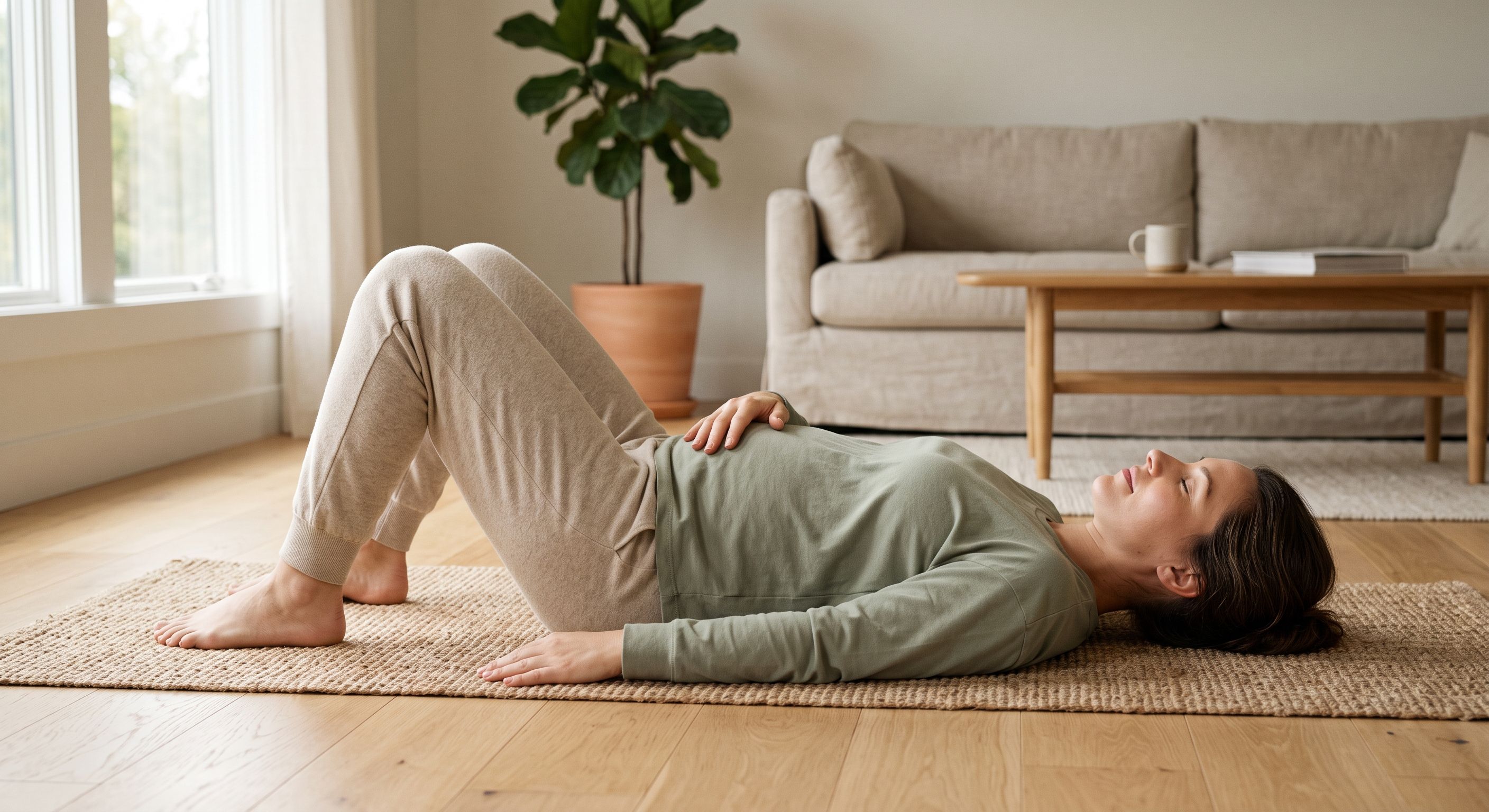
Lie on your back with your knees bent and feet flat.
Inhale through your nose. Let your ribs expand sideways and into your back.
Exhale slowly through your mouth. Gently draw your pelvic floor up and in, then feel your lower belly soften toward your spine.
Repeat for 5 minutes.
Do not suck in hard. Do not brace like you're about to get punched. This is a gentle connection, not a six-pack flex.
The First Three Moves That Actually Help
Once your breathing feels natural, you can add movement. These three are gentle enough for most early postpartum bodies but effective enough to rebuild real strength.
Heel slides
Lie on your back, knees bent. Exhale as you slide one heel away, keeping your pelvis still. Inhale to bring it back. Alternate sides for 8–10 reps.
Glute bridges
Lie on your back, knees bent. Exhale to lift your hips, squeezing your glutes. Inhale to lower slowly. Do 8–10 reps. This strengthens your posterior chain so your back isn't doing all the work.
Modified bird dog
Start on hands and knees. Exhale as you extend one arm only—no leg yet. Keep your ribs down and your belly soft. Alternate arms for 6–8 reps. If that feels easy and there's no doming or pressure, you can try lifting the opposite leg.
Stop any move if you notice:
- •a cone or ridge down the middle of your belly
- •pelvic pressure or leaking
- •pain in your lower back or hips
Those are signs to slow down or regress.
How to Know If You're Ready to Progress
After 1–2 weeks of consistent breathing and gentle movement, check for these green lights:
- •No doming or bulging along your midline during exercise.
- •No pelvic pressure, heaviness, or leaking.
- •You can keep your breath steady without bracing.
Once you can do that, you can gradually add more load or range.
Mistakes That Keep You Stuck
You're not doing anything wrong if progress feels slow. But some common habits can quietly work against you.
- •Crunches and sit-ups too early. They can increase pressure on a healing diastasis recti and pelvic floor.
- •Holding your breath during exercises. That spikes intra-abdominal pressure and makes everything worse.
- •Sucking in all day. Constant tension stops your deep core from learning to engage naturally.
- •Ignoring how you carry your baby. Jutting one hip out or arching your back all day reinforces imbalance.
We don't need to be perfect. We just need to notice patterns and adjust when we can.
A Roadmap When You're Tired of Guessing
You could piece together random YouTube videos. You could save a hundred Instagram posts. But that often leaves you more confused than when you started.
Our Smyt l'Guide dyalek was created for this exact phase. It gives you a complete, step-by-step core recovery plan—short daily sessions, clear progressions, and modifications for C-section mamas. No guesswork. No endless scrolling. Just a plan you can actually follow while running on broken sleep.
So Here's What I Want You to Remember
Postpartum core recovery is not a race. It's a reconnection with the body that carried and birthed your baby. Some days will feel strong. Some days will feel like you're back at square one. Both are normal.
Start with your breath. Add movement slowly. And please, give yourself the same grace you'd give a close friend.
FAQ
When can I start rebuilding my core after birth?
If you had a vaginal birth, you can usually begin gentle breathing and pelvic floor work within the first few days, as long as it feels okay. After a C-section or complicated birth, wait until your provider clears you—often around 6–8 weeks. Always check in with your body, not just the calendar.
Can I fix diastasis recti without surgery?
In many cases, yes. Gentle deep core work, proper breathing, and progressive strengthening can reduce the gap and improve function. Surgery is rarely the first answer. The key is consistency, not intensity.
Is it too late to work on my core if my kids are older?
No. Your body can adapt and strengthen at any stage. Whether you're 6 months postpartum or 6 years, the same principles apply: breathe well, reconnect with your deep core, and progress slowly. It's never too late to feel stronger.